top of page
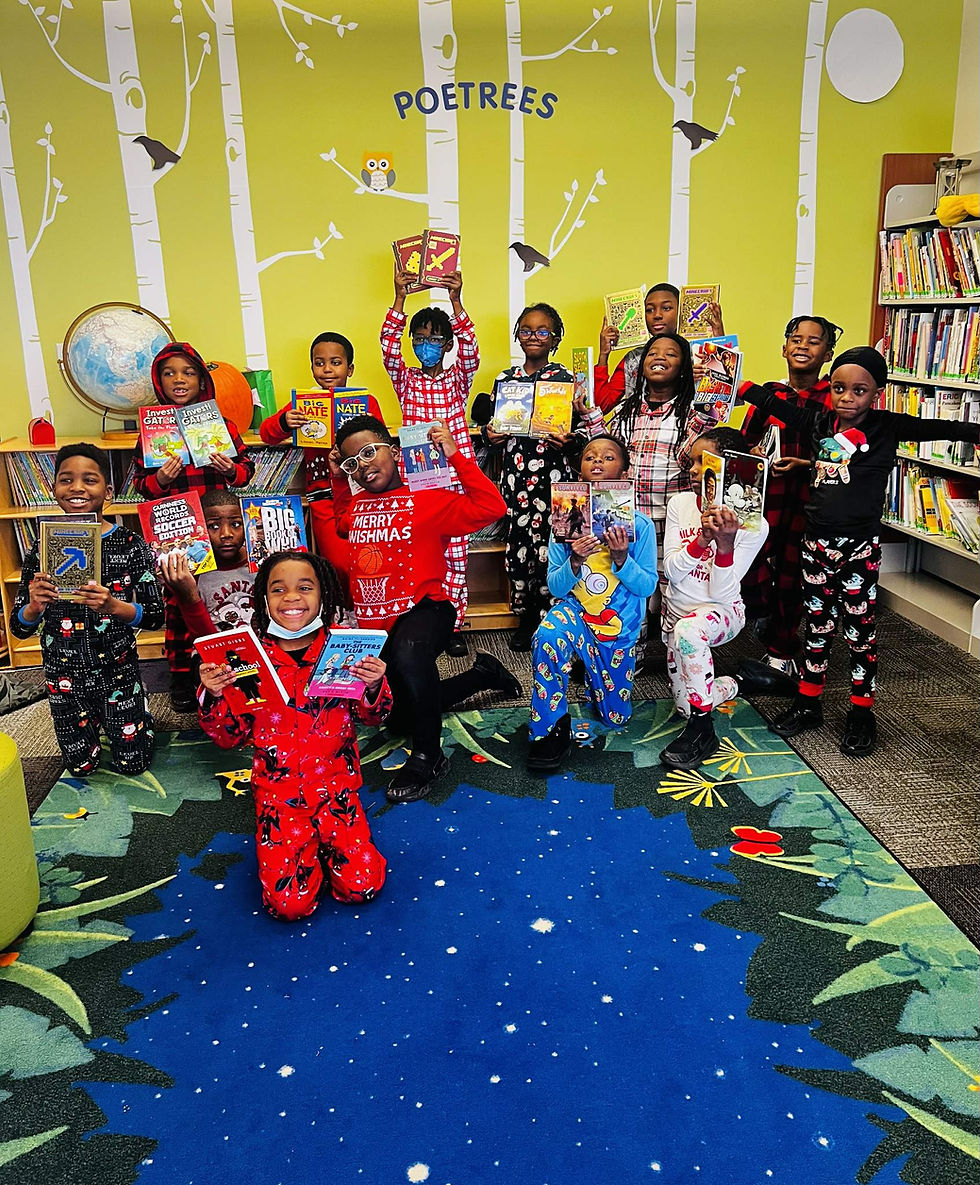
We’re thrilled to reintroduce the BWS Biblioblog with the leadership of our new librarian, Dr. Joyice Robinson Myers. Dr. Jae brings a deep passion for literacy, a joyful approach to learning, and a commitment to helping every scholar discover the power of books.


Happy Fall! 


To celebrate this season, all scholars listened to me read  Goodbye Summer, Hello Autumn by Kenard Pak and discussed nature’s transition from summer to fall. Our K-3 scholars reviewed the four seasons and identified what changes take place during autumn. Our Grades 4-5 scholars were introduced to the Autumn Equinox, and I explained that the days would become darker and darker until the darkest day of the year.


ree

During our fall months, our K–3 scholars have been busy exploring what it means to be thoughtful, responsible readers! We began by learning how to care for our library books and how to tell the difference between picture books and easy readers. Students can now explain what each label means and find both types of books in the library.


ree

I also introduced them to the nonfiction genre, teaching them how to distinguish nonfiction books by two key features: facts (real things that happen/ed in real time (or to real people) in the world) and photographs (not illustrations). I did admit that some nonfiction books do rely on drawings but that most scientific books or biography books include real-life photographs. 


We read ABC Zooborns by Andrew Bleiman, and students were engaged and loved learning about new animals (like dholwe, impala, or nyala). 


ree

Next, they learned the difference between an author and an illustrator. We read Not a Box by Antionette Portis, and students tried their own hand at being illustrators. They each were given four boxes of different shapes and sizes with the task of illustrating them where they were no longer just boxes. It was a great exercise in creativity and they did an excellent job! 


Our scholars extended their learning on the difference between an author and an illustrator by reading  Ish, by Peter Reynolds,  and students tried their own hand at being a drawing artist. They were given six boxes that each included an exemplar drawing. Their task was to draw it in their style, or to make it -ish like using their own creativity or signature. Many of them embraced a sense of freedom and creativity in realizing that it did not need to be perfect or exactly like the exemplar. They did great!


ree

In this same time, our Grades 4-5 scholars have been busy strengthening their reading, writing, and research skills while diving into meaningful stories and activities.

They were introduced to/refreshed on the nonfiction genre. We read Actual Size by Steve Jenkins. Their reading skill was an active listening session with me. I read the book while they listened for any fact that they wanted to record. Once they had their facts recorded, they were allotted to think and develop their own informed opinion about their recorded fact. 


ree

Next, we read Crown: Ode to the Fresh Cut by Derrick Barnes. They learned what an ode is and started on their three-week project of creating an ode to something themselves. They created an anticipatory graphic organizer to brainstorm their ideas and choose what or who they would make an ode to. Over the next two weeks, they will design their own odes in a personal mini-book. I also introduced what I call "author spotlight" to them where we pause to learn more about who has written the story of the week. They REALLY ENJOYED this book, and I look forward to seeing their mini-books soon.


Finally, I kicked off our Grade-Level Reading Clubs, our first school-wide literacy initiative! Each grade voted on their unique club name (a great lesson in teamwork and voting) and learned about their reading reviews. They leave the library each week with a book and new book review to be returned the following week. Our two-pronged reading goals are:


  • Grades K–3: I can read at least one book or chapter per week.

  • Grades 4–5: I can read at least two books or chapters per week.


This initiative is supported by our grade-level reading clubs, where each grade is tasked with reading their selected book and submitting a reading review as evidence of their progress. Each grade is working toward reaching 100% participation, with the bigger goal of eventually reaching 100% participation as an entire school. Scholars are also celebrated individually, whether they are the first in their grade to submit a reading review or the student with the most reviews submitted at key checkpoints. So, without further ado:


Student Spotlights:


The spotlight is due to 2nd graders Derek and Nathan-Etienne,


ree

3rd graders Bryce and Josiah,


ree

4th grader Louis, 


ree

and 5th grader Seyam for being the first in the grade level to return a fully completed reading review!


ree

They submitted excellent work and demonstrated leadership to the rest of their class. 


Class Spotlights: 

The spotlight is due to the First Grade Reading Club, The Sasha Boys! Their reading club returned THE MOST reading reviews. They are on a roll and LEADING the school with most week-to-week. Thank you, first grade team! 

The spotlight is also due to the Second Grade Reading Club, The Sigma Boys! The reading club has the most improved score (during Week 3). Thank you, second grade team! 


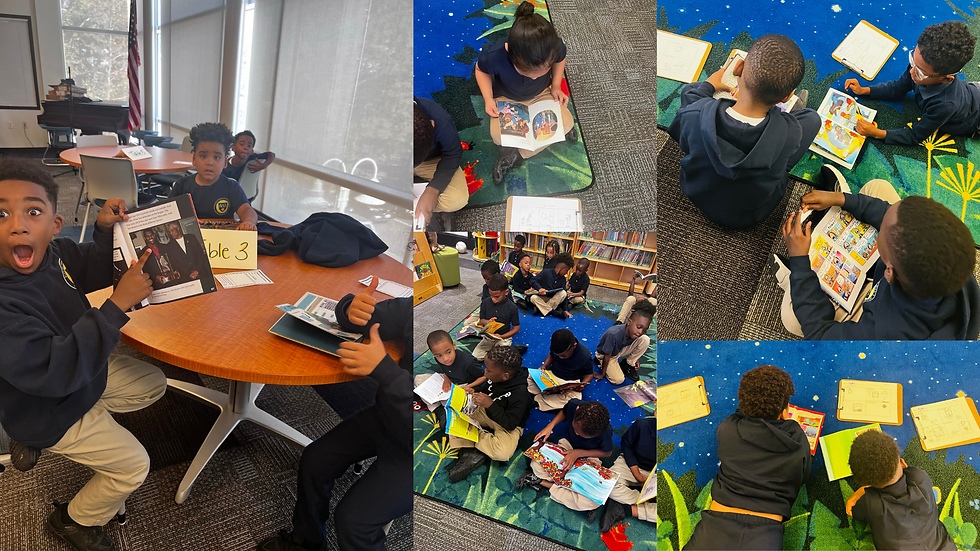
Occasionally, I look for scholars who were “caught reading” during our library time together. Check out some of our scholars who I caught this month: 


ree


ree
ree


MAKE SOME NOISE – OUR BWS WORLD TOUR GOES TO ASIA


The BWS readers exited Africa through Egypt and headed to Jerusalem in time for Easter celebrations. We studied the map of the area and followed in Jesus’ steps during Holy Week. Of course, Bible stories gave richness to the holiday. And we read about why 3 religions find sacred meaning there: Jews, Christians, and Muslims. Older scholars were asked to choose one Middle Eastern country book and report back to the class. Younger boys loved The Catman of Aleppo, a true Syrian story.


Then we headed east, over mountains and desert, to a city along the ancient Silk Road for trading with China: Kabul, Afghanistan. Lucky for us, we have in-house expert Ms. Atmar who teaches in the 3rd grade. She and her family left her home due to war and oppression. Her new home in the USA welcomed her with work and her sons found new friends at BWS. Ms. Atmar spoke about the Koran and that she was in the midst of the season of Ramadan. Although she would not break her daytime fast, she shared her family’s favorite dessert: A custard spiced up with cardamon: Firni. Yes, please!


ree
ree


We ventured into the highest mountains on earth-the Himalayas- and found the home of the Dali Lama. His biography was inspirational, as was his friendship with Bishop Desmond Tutu of South Africa. They collaborated on a book about finding Joy. Meditative music led us to calming thoughts.


ree
ree


Moving south we came to the birthplace of Buddha, aka Siddhartha aka Little Sid who is featured in a clever picture book that shows the dangers of caring too much about things rather than people. Throughout our World Tour younger students have learned how to find the inner message of folktales-universal themes that cross the continents. A special book has a boy from India describe his way of life to an American and see what’s The Same and What’s Different. Travel always helps you see yourself in others as you reflect on your own culture. Indian spices and food like samosas, naan and Masala sauce gave us a new flavor. And learning about the Hindu religion with it many gods and heroes opened our eyes to the lives of children in India.


Now for a musical interlude. As we moved around the world we collected percussion instruments from each region. We listened to typical songs, either old or new, from Go-Go to Bossa Nova to Hugh Masekela to an Irish Reel to Ravi Shankar to Buddhist bells to Japanese Anime tunes to Waltzing Matilda to WipeOut.


ree

ree


ree
ree


By early May, Chris Schmidtt returned for another Piano Concert. He introduced jazz with Take the “A” Train by Duke Ellington and told the life of Beethoven before playing Moonlight Sonata. He was delighted when our own 5th grader Zion played that piece to the whole school at the Community Gathering.


After a study of Space, the 3rd Graders focused on the Environment with a special focus on the crusaders who fought to save our Earth. Earth Day was celebrated, as were Greta Thunberg, Jane Goodall, Teddy Roosevelt and John Muir. Our library has a vast selection of biographies ,with over 40 in the series “Who Was…” which are small books at a 4th-5th grade reading level that give rich biographies of historic, pop and sport figures. And the 3rd graders discovered percussion.


ree
ree


The 4th Grade spent the spring with an award-winning novel called Freewater by Amina Luqman-Dawson. Mrs Ochmanek helmed this project by reading from the book every week. The class was split into 4 groups and had to take turns making notes on the characters and setting. This tale speaks of a brother and a sister before the Civil War who escape slavery on a plantation and follow their mother’s brief directions to find a community of free African Americans deep inside the Dismal Swamp of Virginia. Based on true historical facts, the author creates a world of danger and wonder. The following pictures show the progress each group made in describing, mapping and then creating their own view of Freewater using sticks and moss from our own woods and other simple materials. Behold!


ree
ree


ree
ree
ree


ree


At the end of May, the author visited the school and spoke about her process of research and writing. 24 drafts! This is her first novel and she won every literature award possible in 2023.


ree

ree


Now back to our World Tour. The Dragons appeared as we read about the Lunar New Year Celebrations all over Asia. The BWS library has a huge collection of books about this beast. Back in Covid days, boys were sent Dragon books-every grade, every reading level-and craft projects followed. Dragons are symbolic in many cultures and historic periods. So the grades got to dive into Chinese culture through dragons. Tasting dumplings, too.

ree
ree


Spring rolls followed with a journey into Southeast Asia. Older students learned of the war in Vietnam and an amazing story about Thai boys on a soccer team who get trapped in a cave during a typhoon.


Continuing with a tasting journey, the boys tried seaweed to get a feel for what a Japanese boy might have for a snack. Jordan Carrington (Mr. C’s daughter) taught the boys how to fold a paper dragon and crane in special origami paper. We pulled many books about Japan off the shelves in areas of geography (900’s), art and design (700’s), technology (600’s), folklore (398’s) and fiction at all levels. How did one boy survive a tsunami? What was a Ninja? How did a peach turn into a boy? What is a Haiku poem? (800’s), How do you write Japanese? (400’s), What is a Komodo Dragon? (500’s).


ree
ree


Australia was our last continent before heading home. Our focus was on the animals and the language. Although English is spoken there, the Aussie’s borrowed words and phrases from native Aboriginal people who lived on the large island long before the British. The Embassy offered booklets to the school to define Aussie Lingo. We decoded the famous song Walzting Matilda and learned that a billabong is a watering hole in the Outback and Waltzing is wondering by foot and Matilda is a backpack. Younger boys learned all about marsupials, especially the wombat. Although cute and furry, it is the size of a black bear!


Then we returned to the USA by landing on an island in the middle of the vast Pacific Ocean. Surfing was the theme as we listened to Wipe Out and strummed the Ukelele, an instrument brought to the islands by Portuguese plantation workers.


ree
ree


We made it home with all our memories and musical instruments as souvenirs. We covered thousands of miles, learned about other cultures and read hundreds of books about our World and its people. Make a Joyful Noise!


ree

ree

As we close out the year in the BWS Library, we give thanks to the hearty team of volunteers who work behind the scenes to make all this magic happen: Barbara Ochmanek, Heather Florance, Olivia Hilton, Margie Ware, and Anne Forster. A new Dewey Decimal rug was brought to the Library in honor of all that Mrs. O did to lift the Library into a more professional space. And a stack of shelves have a new sign: “Mrs. Florance’s Favorites” in gratitude for all the time and dedication she gave to our library over 7 years.


ree

ree


Marking ten years in the BWS Library…

I am Cheerfully yours,

Catherine Marquardt


Updated: Apr 18, 2024

Library World Tour Arrives in AFRICA!!


ree

We are halfway through our World Tour of books and it’s time to bang the drums loudly! Thanks to the gift of National Geographic Atlases from St John’s Church of Lafayette Square, various grades started 2024 with a deep dive into geography. Terms became real: hemisphere, compass, physical features like mountains and rivers as boundaries, latitude, longitude, and political borders that change over time.


ree
ree


BWS Board member Toya Carmichael shared her passion for travel by discussing her goal of visiting 50 countries before her 50th birthday. She brought a photo album of her first international trip to Ghana. Toya described the preparation needed to travel: passport, visas, vaccinations, packing, and researching the country. She read to Kindergarten about the mythic origin of Kente cloth.


ree

Then the librarians stepped in to show the scholars all the books we had about African countries and cultures. 5th graders had to choose a country and come back with 3 fun facts to post on the hallway world map. Share the news!


ree


From Ghana we went to nearby Benin with the help of Aaron Hilton. He is on a Fulbright Scholarship to study the artisanal economy of this small country. He organized a Zoom call with the 5th grade. Some of the artwork was on display during the call and Aaron answered many questions, including how can a BWS grad get a Fulbright!


ree

We ventured into two genres to discover the traditions and inventions of several African countries and regions. By looking through the Biography section we discovered stories of individual people making real change. Whether you read about Nelson Mandela moving the world against apartheid in South Africa or Wangari Maathai planting trees in Kenya or William Kamkwamba who brought electricity to his village in Mali, our boys could see the values of creative problem-solving and persistence and serving your community like KINGS.


ree
ree


The other genre that revels so much about a culture is Folklore. From the origins of the world, how humans came to be, how the natural world gives to us (Kente cloth) or the instructive parables using animals, values and traditions are passed to the young. The Ashanti people used the antics of a little spider, Anansi, to show how a trickster can stop a bully or be caught in his own selfishness. Anansi learns many lessons as we laugh along with him.


ree


ree

As we celebrated Black History, we brought music and dance into the library space. Nana Ghana (aka Ernest Frimpong) hauled over 20 African percussion instruments to our school for a fabulous concert. He began by giving the history of drumming in sub-Saharan Africa. They were a means of communication, religious expression, and ceremonial announcements. Nana showed different techniques and rhythms.


ree


ree

Then he asked various students to demonstrate. Oh, boy-now this got exciting. Starting with kindergartners and simple drumming to the oldest and quite complicated multi-rhythms, the library was Alive. Of course, we followed up with many fiction and nonfiction books that included drums as a major element.


ree
ree


What is drumming without dance? At a Community Gathering, Ms. Walker from the Development office shared her experience coaching a team of girls to compete in Dance Competitions. Then she showed us all the awards they had won. Next, we split the school in half. Both Mr. Harris and Dr. Arrington took turns teaching their team a particular African dance. Brother Reggie blasted the music and we were all transported to Africa.


ree

ree

During Black History Month, Ms. Herron had a special theme or event every day. When students arrived dressed as their favorite scientists or inventors, we brought out the corresponding books. We also introduced some local civil rights history such as the integration of a Baltimore amusement park and the heroism of Marylander Harriet Tubman who has a new US stamp in tribute to her bravery on the Underground Railroad.

Both 1st and 2nd graders received a brand new stamped envelope from Ms. Ware who was at the unveiling on the Eastern Shore.


ree


ree


ree

All grades were thrilled with the range of animals, insects, reptiles, and amphibians found in the huge continent of Africa. We did a deep dive into the 500’s on the north wall of our library. Another traveler shared her photos from a real Safari: Dr. Arrington gave us a full picture of her real trip to Tanzania. Then, she read a fictional book about a safari and it corresponded with the exact same animals. Some stories carry the truth within.


ree

Along the way, 3rd graders continued reading leveled books for the Accelerated Reader program. Mrs. Ochmanek filled crates with books about water which is the science/social studies theme that Ms. Clark is teaching. A watery chart followed the progress of the readers as they finished books and cleared high marks on their short weekly assessments. This data gives good feedback to the student as well as the teacher for further instruction. (The pilot program will end this spring but will return next fall.)


ree
ree


The Great Dewey Hunt was a major focus for 4th graders. They had to become experts on finding any nonfiction book or folklore/literature between 000.1 and 999.9 in the stacks.

After mastering all the categories from psychology to religion to myth to social science to folklore to language to domestic technology to the arts and sports to natural science to poetry to geography to history and finally, to biography, 4th graders could teach their fellow students the ropes. Small trinkets representing a book stood at the exact spot. The boys then recorded titles and call numbers and described the subject area. We conducted The Great Dewey Hunt with 2nd graders just as it was done in the book by the same name… ending with We Love Dewey flags.


ree

ree

The scholars ended their tour of Africa by reading books about the history of some of its most famous leaders and eras. Venturing to the Northeast of the continent, we went way back in time to Ancient Egypt.


ree

ree

Sarah Hake’s family is Egyptian and she spent long periods visiting family there. She shared stories of customs of hospitality in the Muslim faith and offered a spread of typical food that our boys dug into. So fresh and tasty. We then opened books about the ancient civilization along the Nile River.


ree


Sarah brought real papyrus for the scholars to practice actual hieroglyphics which is one of the first languages ever written down. We discussed the value of written language for marking land ownership and trade contracts. It allowed Egypt to flourish over a large area, all the way to Alexandria which is where we find one of the largest and oldest Libraries. From the Mediterranean, we travel to the Middle East and Asia!


And another Thanks to Christ Church Washington Parish for their enormous gift of science books to update the 500’s!

ree


00100lrPORTRAIT_00100_BURST2020021913262
shutterstock_1451946107-[Converted].gif
bottom of page