

November/December Biblioblog: Learning Through the Winter Season

Seasonal Learning and Literacy Growth in the BWS Library
Each month, students participate in a reading and calendaring activity using a book from the Calendar Kids series. These texts support students in building calendar awareness by introducing and reinforcing key concepts such as months, seasons, holidays, and the passage of time. Through shared reading and discussion, students learn about federal, school-based, and cultural holidays, as well as seasonal changes that occur throughout the year.
For Kindergarten through Grade 3, students reviewed the four seasons and focused on identifying the changes that take place during winter, including weather patterns, clothing, and daily routines.
For Grades 4 and 5, students extended their learning by exploring the Winter Solstice. We discussed what the Winter Solstice represents, why it is considered the shortest day of the year, and how changes in daylight help mark seasonal transitions.


Schoolwide, students deepened their seasonal awareness and reading comprehension through a shared read-aloud of Snuggle Season by Jaimie MacGibbon in anticipation of upcoming snowfall. As we read, students made meaningful text-to-world and text-to-home connections, linking events in the story to real-life weather changes, routines, and personal experiences. These discussions supported students’ ability to use details from the text to build understanding and make connections beyond the page.
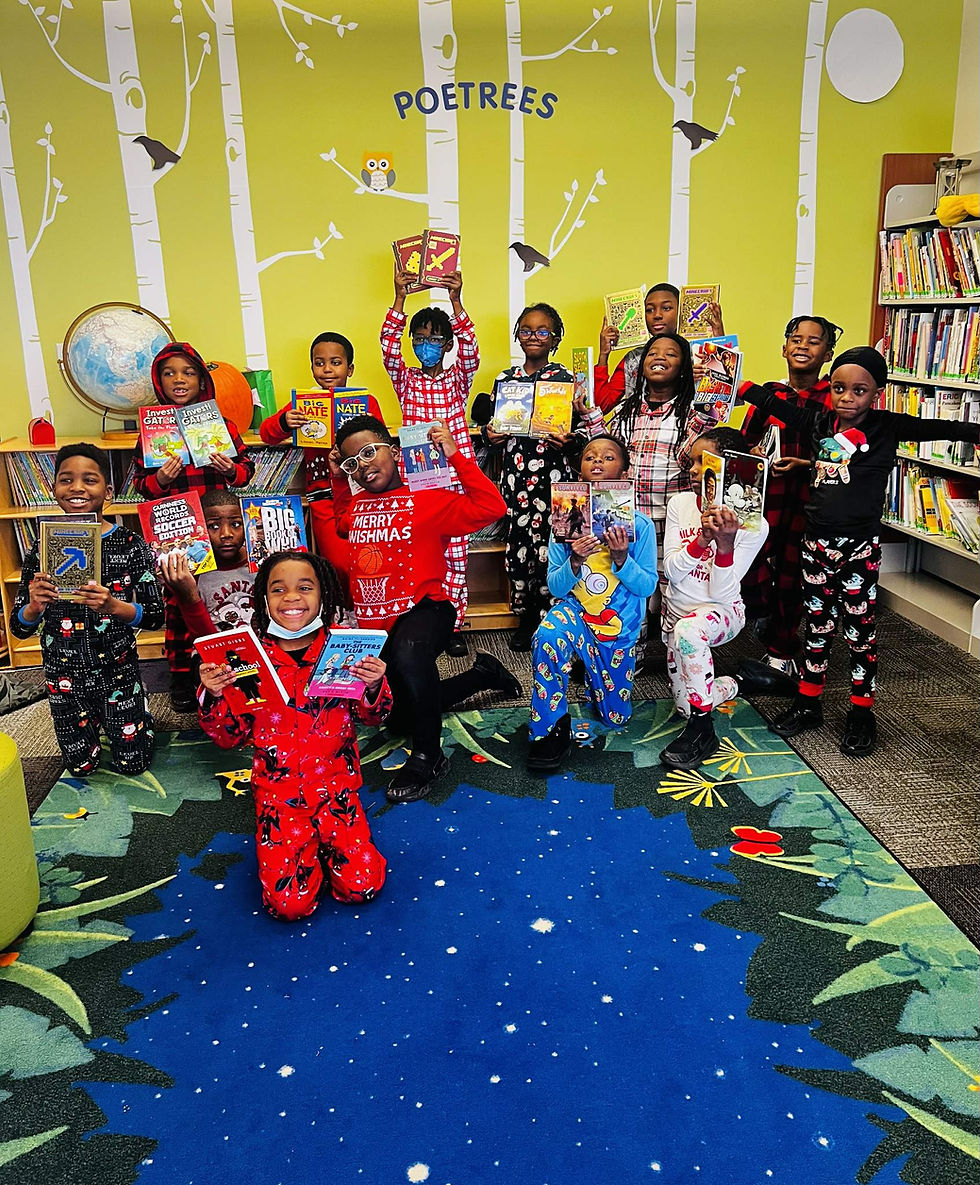
The BWS Library also participated in a Book Fair Drive, which allowed us to expand our collection with new, high-interest titles. I selected approximately 100 new books for our scholars, and donors purchased about 125 titles, all of which have now been added to our library inventory. To celebrate these additions, I curated a display of new and assorted books for students to browse, explore, and discuss. Many students expressed excitement and strong interest in the new selections.
Special THANK YOU to the Beauvoir School!
In response to student enthusiasm, they requested a read-aloud from one of our new books. I selected What Would You Rather Be: A Tiger or a Tiger Shark? to support instruction in fact versus opinion, fiction versus nonfiction, and critical thinking. Through guided discussion, students practiced thinking carefully before forming an opinion and learned how new information can help refine or change their thinking.
K-3 students began a new story elements learning series with a focus on characters. Students connected this lesson to their previous learning about the roles of the author and illustrator, building continuity across reading units. The learning target for this activity was: “I can draw a character in the story.” As part of the lesson, we also reviewed the difference between what an author does (writes the words) and what an illustrator does (draws the pictures). We read Don't Let the Pigeon Drive the Bus! by Mo Willems. During the read-aloud, students paid close attention to the characters and discussed what made them important to the story.


In this same time, our Grades 4-5 scholars have been busy strengthening their reading, writing, and research skills while diving into meaningful stories and activities.

These students have been engaged in an extended storytelling-to-writing unit focused on odes and personal expression. Students learned how to write and present odes after reading Crown: Ode to a Fresh Cut and completing an author study of Derrick Barnes. This unit was designed to help students move from listening to and analyzing a mentor text to producing original writing inspired by its structure, style, and themes.

Across four-to-five weeks, students participated in a series of learning tasks that supported this progression. They analyzed how the author used voice, imagery, and emotion to tell a meaningful story, then applied those techniques to their own writing. Students drafted, revised, and prepared their odes for presentation, strengthening both their written expression and oral storytelling skills. Watch Below!
Our Literacy Initiative: Class & Student Spotlights:
The Grade-Level Reading Clubs continue to make steady and encouraging progress during their inaugural year. As with any new initiative, implementation has involved refinement and adjustment; however, our early indicators suggest strong engagement and growing momentum across grade levels.
As a reminder, our initiative is guided by two reading goals:
Grades K–3: Students aim to read at least one book or chapter per week.
Grades 4–5: Students aim to read at least two books or chapters per week.
While the program has not yet reached 100% participation at the grade-level or school-wide level, notable progress is being made. Fourth grade scholars came closest to full participation, achieving 91% engagement during a single week in November.
Class Spotlight
This reporting period’s class spotlight is once again awarded to the First Grade Reading Club, The Sasha Boys. This group has submitted the highest number of reading reviews overall and continues to lead the school in total submissions since the program’s launch. Their sustained participation and enthusiasm exemplify leadership and accountability within the literacy initiative. Congratulations to the first-grade team for their continued success.
Schoolwide Reading Review Submissions (Year-to-Date)
Grade 1: 36 total reading reviews
Grade 2: 27 total reading reviews
Grade 3: 19 total reading reviews
Grade 4: 13 total reading reviews
Grade 5: 13 total reading reviews
Student Spotlight
At the individual level, recognition is awarded to Seyam (Grade 5) for reading the highest number of books across the entire school.
Top Readers by Grade Level
Grade 1: Ryan and Judah

Grade 2: Nathan-Etienne

Grade 3: Kenneth (not pictured) and Lincoln

Grade 4: Louis and Micah

Grade 5: Seyam

As the Grade-Level Reading Clubs continue to evolve, these achievements reflect a growing culture of reading, accountability, and scholarly pride. We look forward to building on this momentum and increasing participation across all grades in the coming months.


Comments